Introduction
Republic Day is not just another national holiday on the calendar of India. It is a day that reminds every
citizen of the journey from colonial rule to a sovereign, democratic republic governed by its own
Constitution. On 26 January 1950, India formally adopted its Constitution and transformed itself into a
republic, ensuring that the power of governance rests in the hands of the people. As we celebrate Republic Day 2026, it is an opportunity to reflect on our past, honor our present, and renew our commitment to the future of our nation.
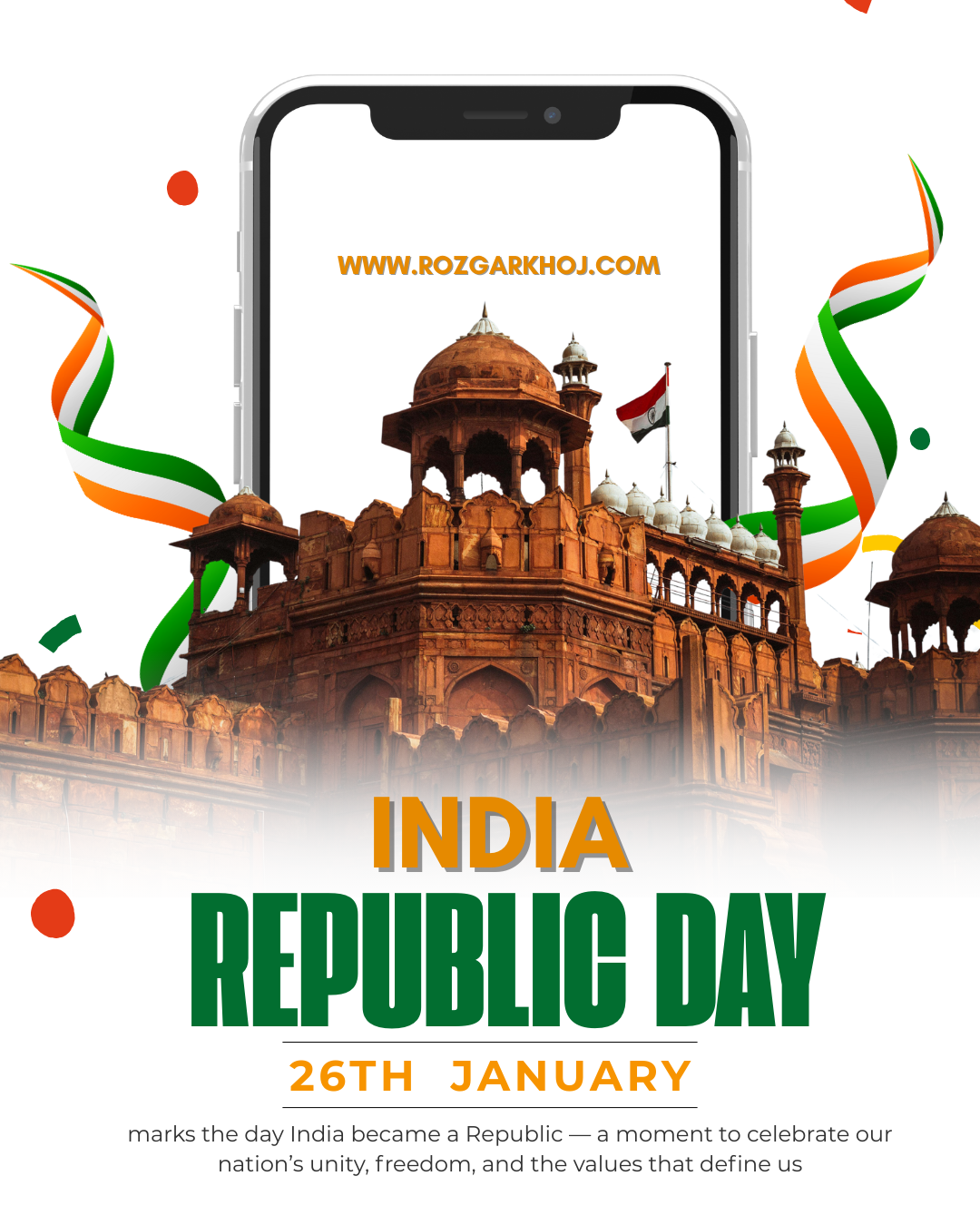
Every year on 26th January, India pauses to celebrate a defining moment in its history—the day the Constitution of India came into force in 1950. Republic Day is not merely a national holiday marked by parades and patriotic songs; it is a reminder of the values, struggles, and aspirations that shaped the world’s largest democracy. As we celebrate Republic Day 2026, the occasion invites us to reflect on how far the nation has come, the responsibilities we share as citizens, and the vision that continues to guide India toward a more just and inclusive future.
The Historical Significance of Republic Day
The journey to becoming a republic was long and demanding. After gaining independence from British rule on 15th August 1947, India faced the monumental task of framing a संविधान (Constitution) that could unite a diverse population and establish a democratic framework for governance. Dr. B. R. Ambedkar, as the Chairman of the Drafting Committee, along with other visionary leaders, worked tirelessly to craft a document that enshrined liberty, equality, and fraternity as the pillars of the new nation.
On 26th January 1950, the Constitution of India came into effect, replacing the Government of India Act of 1935. This date was chosen deliberately, as 26th January had earlier been observed as Purna Swaraj Day in 1930, symbolizing the resolve for complete independence. Thus, Republic Day stands as a bridge between the freedom struggle and the establishment of a sovereign democratic republic.
Republic Day 2026: A Contemporary Reflection
Republic Day 2026 arrives at a time when India is navigating rapid technological change, economic growth, and evolving global responsibilities. The nation today is young, dynamic, and ambitious, yet deeply rooted in its traditions. Celebrating Republic Day in this era is not only about honoring the past but also about reaffirming our commitment to democratic values in a complex and interconnected world.
In 2026, discussions around good governance, digital democracy, sustainable development, and social justice are more relevant than ever. The Constitution remains a living document—flexible enough to adapt to changing times, yet firm in its core principles. Republic Day reminds every citizen that democracy thrives only when people actively participate, question, and contribute.
The Grandeur of the Republic Day Parade
One of the most iconic features of Republic Day celebrations is the grand parade held at Kartavya Path (formerly Rajpath) in New Delhi. The parade is a spectacular display of India’s military strength, cultural diversity, and organizational excellence. The President of India, as the ceremonial head of the state, hoists the national flag and takes the salute, while a chief guest from a friendly foreign nation often graces the occasion, highlighting India’s diplomatic ties.
The marching contingents of the Army, Navy, and Air Force, the display of indigenous defense equipment, and the breathtaking flypast by fighter jets fill citizens with pride. Equally captivating are the cultural tableaux from different states and union territories, each portraying unique traditions, folk dances, and developmental themes. In 2026, these tableaux are expected to reflect India’s progress in areas such as renewable energy, women empowerment, digital innovation, and rural development.
The Role of the Constitution in Modern India
The Constitution of India is one of the longest and most detailed constitutions in the world. It guarantees fundamental rights such as freedom of speech, equality before the law, and the right to life and dignity. At the same time, it lays down fundamental duties, reminding citizens that rights and responsibilities go hand in hand.
In 2026, as India continues to reform its institutions and policies, the Constitution remains the ultimate guide. Whether it is strengthening federalism, ensuring judicial independence, promoting social justice, or protecting minority rights, the constitutional framework provides stability and direction. Republic Day is therefore not just a ceremonial event—it is a day to renew our faith in constitutional morality.
Republic Day and the Youth of India
With more than half of its population under the age of 35, India is a young nation. The youth play a decisive role in shaping the republic’s future. On Republic Day 2026, messages of innovation, entrepreneurship, and ethical leadership resonate strongly with young Indians who aspire to build a better society.
From start-ups and scientific research to sports and social activism, young citizens are redefining what it means to serve the nation. Republic Day encourages them to look beyond personal success and contribute to national development, social harmony, and environmental sustainability.
Celebrations Beyond the Capital
While the Delhi parade captures global attention, Republic Day is celebrated with equal enthusiasm in every state, district, and village. Governors hoist the flag in state capitals, and district collectors preside over local ceremonies. Cultural programs, patriotic songs, and community gatherings bring people together across regions, languages, and faiths.
In border areas, remote villages, and island territories, Republic Day holds special significance. It symbolizes the presence of the nation in every corner and reinforces the idea that every citizen, regardless of location, is an integral part of the republic.
Challenges and Responsibilities Ahead
As India celebrates Republic Day 2026, it also faces important challenges—economic inequality, climate change, social divisions, and the need for institutional reforms. Democracy is not a destination but a continuous journey. The strength of the republic depends on informed citizens, transparent institutions, and leaders who uphold constitutional values.
Republic Day urges us to ask difficult questions: Are we protecting the rights of the marginalized? Are we promoting dialogue over division? Are we safeguarding democratic institutions and the rule of law? These reflections are essential to keep the republic strong and resilient.
Conclusion: Renewing the Promise of the Republic
Republic Day 2026 is a celebration of India’s constitutional identity and democratic spirit. It honors the vision of the founding fathers and the sacrifices of countless freedom fighters. More importantly, it reminds every citizen that the republic lives not in parades or speeches alone, but in everyday acts of justice, tolerance, and responsibility.
As the tricolour flutters in the winter sky on 26th January 2026, let us renew our pledge to uphold the Constitution, respect diversity, and work together for a peaceful, prosperous, and inclusive India. In doing so, we ensure that the idea of India—as a sovereign, socialist, secular, democratic republic—continues to shine brightly for generations to come.